
Ketamine side effects and risks: Ketamine has gained attention beyond its original use as an anesthetic. Scientists are uncovering surprising ways it interacts with the brain, offering new insights into mental health treatment and brain function. Understanding what happens to your brain on ketamine helps explain why it matters for therapy, research, and even recreational use.
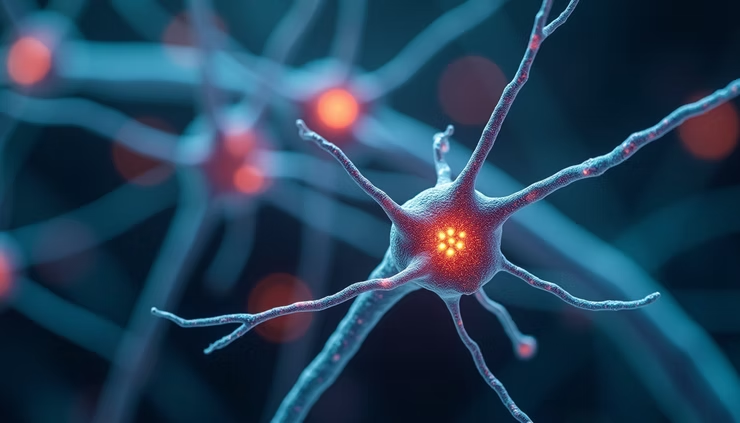
Neural connections in the brain affected by ketamine
What Ketamine Is and How It Works in the Brain | ketamine side effects and risks
Ketamine is a dissociative anesthetic developed in the 1960s. Unlike traditional anesthetics, it works primarily by blocking NMDA receptors in the brain. These receptors play a key role in controlling glutamate, the brain’s main excitatory neurotransmitter.
By blocking NMDA receptors, ketamine disrupts normal glutamate signaling. This leads to a cascade of effects:
- Increased glutamate release in other brain areas
- Activation of AMPA receptors, which promote synaptic plasticity
- Boosted production of brain-derived neurotrophic factor (BDNF), a protein that supports neuron growth and survival
This combination helps explain ketamine’s rapid antidepressant effects and its ability to alter perception and consciousness.
How Ketamine Changes Brain Activity | ketamine side effects and risks
Brain imaging studies reveal that ketamine changes activity in several key regions:
- Prefrontal cortex: Involved in decision-making and mood regulation, ketamine increases connectivity here, which may help “reset” dysfunctional brain circuits in depression.
- Hippocampus: Important for memory and learning, ketamine promotes neurogenesis and synaptic growth in this area.
- Default mode network (DMN): This network is active during self-reflection and mind-wandering. Ketamine reduces DMN activity, which might explain the feeling of ego dissolution or detachment some users experience.
These changes happen quickly, often within hours, which contrasts with traditional antidepressants that take weeks to show effects.
Surprising Scientific Insights About Ketamine’s Effects
Research has uncovered several unexpected findings about ketamine’s impact on the brain:
- Rapid synaptic growth: Ketamine can stimulate the formation of new synapses in just 24 hours, helping repair brain circuits damaged by stress or depression.
- Anti-inflammatory effects: Ketamine reduces inflammation in the brain, which is linked to depression and other mental health disorders.
- Altered perception and consciousness: At higher doses, ketamine induces dissociation, hallucinations, and changes in time perception by disrupting normal brain network communication.
- Potential neurotoxicity at high doses: While therapeutic doses are generally safe, excessive or chronic use can harm neurons, highlighting the importance of controlled administration.
These insights guide how ketamine is used in clinical settings and inform ongoing research into safer, more effective treatments.
Practical Implications for Mental Health Treatment | ketamine side effects and risks
Ketamine’s unique brain effects have led to its use in treating conditions that do not respond well to traditional therapies:
- Treatment-resistant depression: Ketamine infusions can relieve symptoms within hours, offering hope for patients who have tried multiple antidepressants without success.
- Post-traumatic stress disorder (PTSD): By disrupting traumatic memory circuits, ketamine may reduce PTSD symptoms.
- Chronic pain: Ketamine’s action on NMDA receptors helps manage neuropathic pain and complex regional pain syndrome.
Clinics offering ketamine therapy carefully monitor dosage and frequency to maximize benefits and minimize risks.
Safety and Responsible Use
Understanding ketamine’s brain effects also highlights the need for caution:
- Recreational use can lead to cognitive impairment, memory problems, and bladder issues.
- Combining ketamine with other substances increases risks.
- Long-term effects are still being studied, so medical supervision is crucial for therapeutic use.
For those interested in exploring ketamine products, it is essential to use reputable sources and consult healthcare professionals. For more information on ketamine products, visit WebCartels and their shop, which offers various ketamine forms including pure ketamine crystal and ketamine HCL injection vials.
Future Directions in Ketamine Research
Scientists continue to explore ketamine’s potential beyond current uses:
- Developing safer analogs with fewer side effects
- Understanding how ketamine affects brain networks in different mental illnesses
- Combining ketamine with psychotherapy for lasting improvements
- Investigating its role in neuroplasticity and brain repair
These efforts could transform how we treat mental health and neurological disorders.
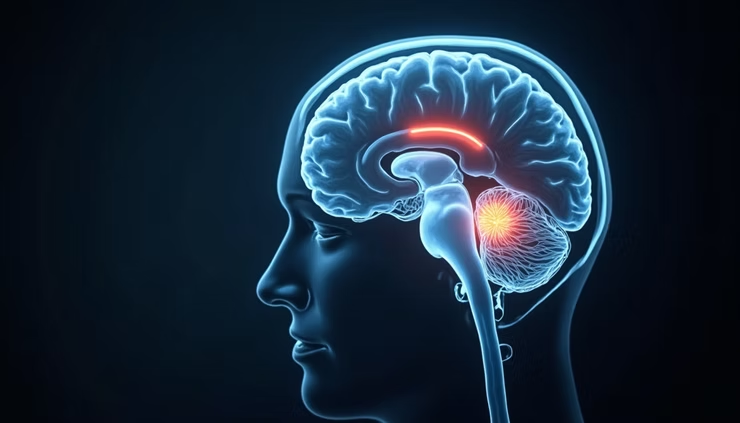
Brain scan highlighting ketamine-affected areas
Summary
Ketamine changes the brain in powerful ways by altering neurotransmitter systems, promoting synaptic growth, and shifting brain network activity. These effects explain its rapid antidepressant properties and unique impact on consciousness. While promising for mental health treatment, ketamine requires careful use due to potential risks. Ongoing research will clarify how to harness ketamine’s benefits safely and effectively.
If you want to learn more or connect with communities discussing ketamine and related topics, consider joining groups like WebCartel VIP on Telegram, Streetsbaba44, or DMT Community.
Disclaimer: This article is for informational purposes only and does not replace professional medical advice. Always consult a healthcare provider before considering ketamine treatment.