
Ketamine vs Antidepressants: Depression affects millions worldwide, and finding effective treatment remains a challenge. Traditional antidepressants have been the mainstay for decades, but ketamine has emerged as a promising alternative. Understanding what sets ketamine apart from conventional medications can help patients and caregivers make informed decisions about mental health care.
!Eye-level view of a vial of ketamine solution on a medical tray
How Traditional Antidepressants Work
Traditional antidepressants, such as selective serotonin reuptake inhibitors (SSRIs) and tricyclic antidepressants (TCAs), target neurotransmitters in the brain. They primarily work by increasing the levels of serotonin, norepinephrine, or dopamine to improve mood and reduce symptoms of depression. These medications typically require weeks to show noticeable effects. Ketamine vs Antidepressants
Common Features of Traditional Antidepressants | Ketamine vs Antidepressants
- Delayed onset: Effects often take 4 to 6 weeks to appear.
- Daily dosing: Patients usually take pills every day.
- Side effects: Can include weight gain, sexual dysfunction, fatigue, and gastrointestinal issues.
- Variable effectiveness: About 30-40% of patients do not respond adequately.
While these drugs have helped many, their limitations have driven research into faster-acting alternatives.
What Makes Ketamine Different | Ketamine vs Antidepressants
Ketamine is a dissociative anesthetic that has been repurposed for treating depression, especially treatment-resistant cases. Unlike traditional antidepressants, ketamine acts on the glutamate system, a different neurotransmitter pathway. Ketamine vs Antidepressants
Rapid Action | Ketamine vs Antidepressants
One of ketamine’s most notable features is its rapid antidepressant effect. Patients often report improvement within hours or days after a single dose, compared to weeks with traditional drugs. Ketamine vs Antidepressants
Mechanism of Action
Ketamine blocks NMDA receptors in the brain, which leads to increased synaptic connections and neuroplasticity. This process helps restore communication between brain cells affected by depression.
Administration Methods
Ketamine can be administered in several forms:
- Intravenous infusion: Common in clinical settings.
- Nasal spray: FDA-approved for certain cases.
- Oral or sublingual: Less common but available.
Side Effects and Risks | Ketamine vs Antidepressants
Ketamine can cause dissociation, dizziness, increased blood pressure, and nausea during or shortly after administration. Long-term effects are still under study, so medical supervision is essential.
Comparing Effectiveness and Use Cases
| Aspect | Traditional Antidepressants | Ketamine |
|————————-|———————————————|——————————————-|
| Onset of action | Weeks | Hours to days |
| Target neurotransmitter | Serotonin, norepinephrine, dopamine | Glutamate (NMDA receptor antagonist) |
| Administration | Oral pills daily | IV infusion, nasal spray, oral |
| Side effects | Weight gain, sexual dysfunction, fatigue | Dissociation, blood pressure changes |
| Use cases | First-line treatment for depression | Treatment-resistant depression, rapid relief |
Ketamine is often reserved for patients who have not responded to traditional treatments or need rapid symptom relief.
Practical Considerations for Patients
Choosing between ketamine and traditional antidepressants depends on individual needs, medical history, and treatment goals.
- Cost and access: Ketamine treatments can be expensive and less accessible.
- Medical supervision: Ketamine requires administration in controlled settings.
- Long-term management: Traditional antidepressants are better studied for long-term use.
- Side effect tolerance: Patients sensitive to traditional drug side effects might consider ketamine under guidance.
Where to Learn More and Access Products
For those interested in exploring ketamine or related compounds, resources are available online. It is crucial to consult healthcare professionals before starting any treatment.
- Webcartels VIP Shop
- Buy Pure Ketamine Crystal
- Buy Ketamine HCl Injection Vials
- Buy Crystal 2-Fluorodeschloroketamine (2-FDCK)
- Buy Powder Carfentanil HCl Powder
Join communities for discussion and support:
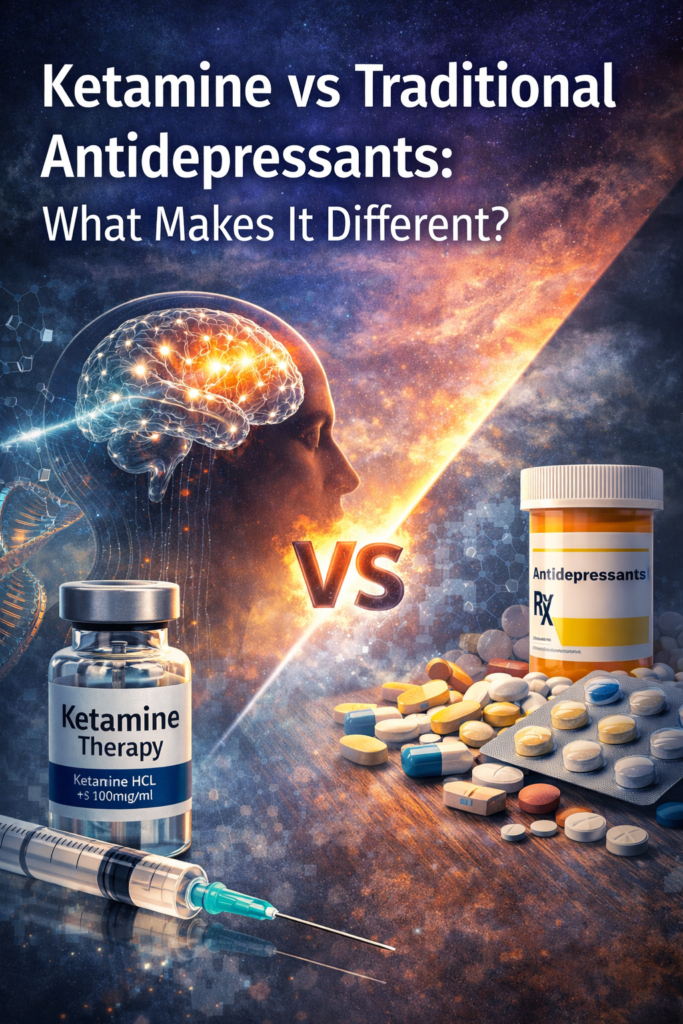
!Close-up view of antidepressant pills and ketamine vial side by side
Final Thoughts on Choosing the Right Treatment
Ketamine offers a promising alternative for people struggling with depression, especially when traditional antidepressants fail or act too slowly. Its rapid effects and unique mechanism provide hope for faster relief. However, ketamine is not a universal solution and requires careful medical oversight.
Patients should discuss all options with their healthcare providers, considering factors like treatment history, side effects, and lifestyle. Combining professional advice with up-to-date information helps ensure the best path toward mental wellness.