

Introduction
Where To Buy Psychedelics Online – The human brain has an incredible ability to adapt and change throughout life. This ability, known as neuroplasticity, allows the brain to form new connections, reorganize itself, and recover from injuries. Recently, researchers have been exploring how psychedelics may influence neuroplasticity, opening new possibilities for mental health treatment and brain function enhancement. This post unpacks the relationship between neuroplasticity and psychedelics, explaining what it means for science and everyday life.
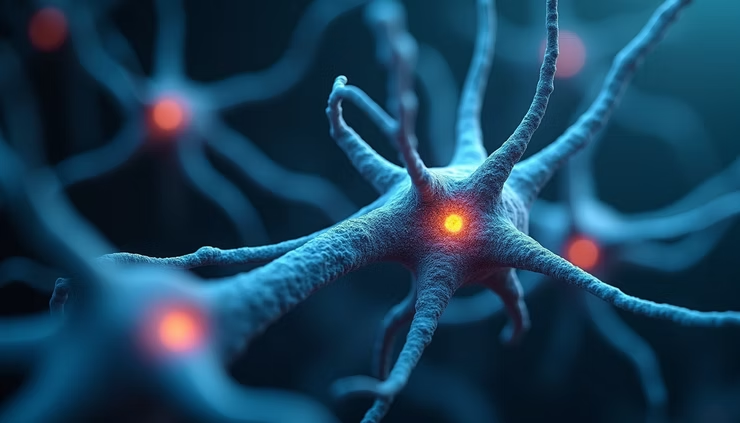
What Is Neuroplasticity? | Where To Buy Psychedelics Online
Neuroplasticity refers to the brain’s ability to change its structure and function in response to experience, learning, or injury. This process happens at multiple levels, including:
- Formation of new synapses (connections between neurons)
- Strengthening or weakening of existing synapses
- Growth of new neurons in certain brain areas
Neuroplasticity is essential for learning new skills, adapting to new environments, and recovering from brain damage. It is a lifelong process but tends to slow down with age.
How Psychedelics Affect the Brain | Where To Buy Psychedelics Online
Psychedelics are substances that alter perception, mood, and cognitive processes. Classic psychedelics include psilocybin (magic mushrooms), LSD, and DMT. These compounds primarily act on serotonin receptors in the brain, especially the 5-HT2A receptor.
Research shows that psychedelics can:
- Increase brain connectivity by promoting communication between different brain regions
- Enhance emotional processing and introspection
- Reduce activity in the brain’s default mode network, which is linked to self-focused thinking
These effects contribute to the profound changes in consciousness and perception experienced during psychedelic use.
The Link Between Psychedelics and Neuroplasticity | Where To Buy Psychedelics Online
Recent studies suggest psychedelics may directly promote neuroplasticity. Laboratory experiments on neurons and animal models have found that psychedelics can:
- Stimulate the growth of dendritic spines, the small protrusions on neurons where synapses form
- Increase the expression of brain-derived neurotrophic factor (BDNF), a protein that supports neuron survival and growth
- Enhance synaptogenesis, the formation of new synapses
For example, a 2018 study published in Cell Reports showed that psychedelics like LSD and psilocybin rapidly increased dendritic growth and synapse formation in cultured neurons. This suggests these substances could help the brain rewire itself more efficiently.
Practical Implications for Mental Health
The ability of psychedelics to boost neuroplasticity has important implications for treating mental health conditions. Many disorders, such as depression, anxiety, and PTSD, involve rigid or maladaptive brain circuits. By promoting neuroplasticity, psychedelics may help “reset” these circuits and enable new, healthier patterns of thinking.
Clinical trials have demonstrated promising results:
- Psilocybin-assisted therapy has shown significant improvements in treatment-resistant depression
- MDMA (a related compound) combined with therapy has helped reduce PTSD symptoms
- Psychedelic experiences often lead to lasting positive changes in mood and outlook
These findings suggest psychedelics could become valuable tools in psychotherapy, especially when combined with professional support.
Safety and Considerations
While the potential benefits are exciting, psychedelics are powerful substances that require careful use. They can cause intense psychological experiences and are not suitable for everyone. Risks include:
- Anxiety or panic during the experience
- Possible worsening of certain mental health conditions
- Legal restrictions in many countries
Anyone interested in exploring psychedelics for mental health should consult qualified healthcare providers and consider participating in supervised clinical settings.
Future Directions in Research
Scientists continue to investigate how psychedelics influence neuroplasticity and brain function. Key areas of focus include:
- Understanding the precise molecular pathways involved
- Identifying which psychedelics and doses are most effective
- Exploring long-term effects on brain structure and cognition
- Developing new compounds that promote neuroplasticity without hallucinogenic effects
This research could lead to new treatments for a range of neurological and psychiatric disorders.