
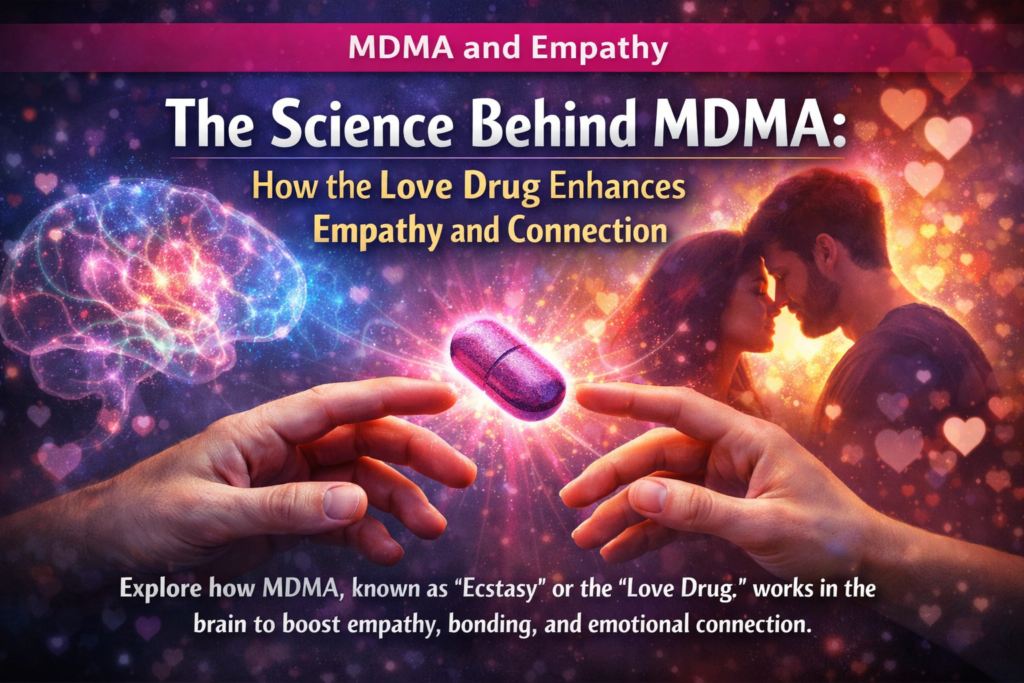
The Science Behind the Love Drug: MDMA, often called the “love drug,” has gained attention for its unique ability to enhance feelings of empathy, trust, and emotional connection. This reputation is not just hype; scientific research reveals how MDMA affects the brain and body to create these powerful social effects. Understanding the science behind MDMA helps explain why it is used in therapeutic settings and why it has become popular in social environments.
!Close-up view of a capsule labeled MDMA on a reflective surface
How MDMA Works in the Brain | The Science Behind the Love Drug
MDMA (3,4-methylenedioxymethamphetamine) primarily influences the brain’s neurotransmitters, which are chemicals that transmit signals between nerve cells. The key neurotransmitters affected by MDMA include:
- Serotonin: MDMA causes a massive release of serotonin, which regulates mood, social behavior, and feelings of well-being.
- Dopamine: This neurotransmitter is linked to pleasure and reward, contributing to the euphoric effects of MDMA.
- Norepinephrine: It increases heart rate and energy, enhancing alertness and physical stamina.
The surge of serotonin is especially important for empathy. It reduces fear and anxiety, making it easier for people to open up emotionally and connect with others. This effect explains why MDMA is often described as a substance that promotes emotional bonding and trust.
Empathy and Emotional Connection | The Science Behind the Love Drug
Empathy is the ability to understand and share the feelings of another person. MDMA enhances empathy by:
- Lowering social barriers: Users often feel less judgmental and more accepting of others.
- Increasing emotional sensitivity: People become more aware of their own emotions and those of others.
- Promoting trust: The drug reduces the fear of rejection or criticism, encouraging honest communication.
These effects make MDMA a valuable tool in psychotherapy, especially for treating post-traumatic stress disorder (PTSD). Therapists use MDMA-assisted sessions to help patients confront painful memories without feeling overwhelmed by fear or shame.
MDMA in Therapeutic Settings | The Science Behind the Love Drug
Research shows that MDMA can improve therapy outcomes by fostering a safe emotional environment. Patients report feeling more connected to their therapists and more willing to explore difficult topics. Clinical trials have demonstrated significant reductions in PTSD symptoms after MDMA-assisted therapy.
This therapeutic use highlights the drug’s potential beyond recreational settings. It also emphasizes the importance of controlled, supervised environments to maximize benefits and minimize risks.
Recreational Use and Social Impact
Outside therapy, MDMA is popular in social settings like music festivals and parties. Users often describe feeling a deep sense of connection with others, increased empathy, and heightened sensory experiences. These effects contribute to the drug’s nickname, the “love drug.”
However, recreational use carries risks, including dehydration, overheating, and potential neurotoxicity if used excessively or without care. Responsible use and awareness of dosage are crucial for safety.
Different Forms of MDMA Available
MDMA comes in various forms, including capsules and pills with different dosages. For those interested in exploring MDMA, it is important to understand the differences:
- Capsules typically contain measured doses, such as 120mg, 150mg, or 180mg.
- Pills may vary in purity and dosage, so sourcing from reliable suppliers is essential.
For example, products like 120mg MDMA capsules, 150mg MDMA capsules, and 180mg MDMA capsules offer options for different experience levels.
Safety Tips for MDMA Use
If considering MDMA, keep these safety tips in mind:
- Start with a low dose to assess your body’s reaction.
- Stay hydrated but avoid excessive water intake.
- Take breaks from dancing or physical activity to prevent overheating.
- Avoid mixing MDMA with other substances, especially alcohol or stimulants.
- Use testing kits to verify the substance’s purity.
Broader Context of Psychedelic Substances
MDMA is part of a larger group of substances that affect perception and emotions. Other popular psychedelics include LSD and DMT, which also influence consciousness but in different ways. For those curious, products like LSD gel tabs, LSD liquid, and freebase DMT powder are available through specialized sources.
Exploring these substances requires careful research and respect for their effects and legal status.
The Science Behind the Love Drug
!Eye-level view of a small pile of colorful MDMA pills on a dark surface
Summary
MDMA’s ability to enhance empathy and emotional connection comes from its impact on brain chemistry, especially serotonin release. This effect makes it useful in therapy and popular in social settings. Understanding how MDMA works helps users appreciate its benefits and risks.
For those interested in exploring MDMA, choosing reliable sources and practicing safe use is essential. Whether for therapeutic purposes or social experiences, MDMA offers a unique way to connect with others and explore emotions.
Explore more about MDMA and related substances at WebCartels and browse their selection at the shop.