
Ketamine therapy for depression: Depression affects millions worldwide, and traditional treatments do not work for everyone. Recently, ketamine has emerged as a promising option for those with treatment-resistant depression. But how does ketamine work in the brain, and why is it gaining attention as a fast-acting antidepressant? This article explores the science behind ketamine, its effects on the brain, and its role in modern depression treatment.

Ketamine crystals close-up, scientific focus on texture and purity
What Is Ketamine? ( Ketamine therapy for depression )
Ketamine is a medication originally developed as an anesthetic in the 1960s. It has been used safely in medical settings for decades, especially in surgery and pain management. Unlike traditional antidepressants, ketamine acts quickly and through different brain pathways. This unique action has led researchers to study ketamine as a treatment for depression, especially in cases where other medications fail.
How Ketamine Works in the Brain | Ketamine therapy for depression
Ketamine primarily affects the brain’s glutamate system. Glutamate is the most abundant excitatory neurotransmitter, responsible for sending signals between nerve cells. Ketamine blocks a specific receptor called the NMDA receptor. This blockade leads to a cascade of effects that increase synaptic connections and improve communication between brain cells.
Key Mechanisms | Ketamine therapy for depression
- NMDA receptor blockade
Ketamine blocks NMDA receptors on inhibitory neurons, which reduces their activity. This disinhibition causes an increase in glutamate release.
- Activation of AMPA receptors
The surge in glutamate activates AMPA receptors on neighboring neurons, which promotes synaptic plasticity—the brain’s ability to form new connections.
- Increase in Brain-Derived Neurotrophic Factor (BDNF)
Ketamine boosts levels of BDNF, a protein that supports neuron growth and survival. Higher BDNF levels correlate with improved mood and cognitive function.
- mTOR pathway activation
Ketamine stimulates the mTOR signaling pathway, which plays a role in protein synthesis necessary for synapse formation.
These combined effects help reverse the synaptic deficits often seen in depression, leading to rapid mood improvement.
Why Ketamine Is Used for Depression | Ketamine therapy for depression
Traditional antidepressants like SSRIs can take weeks to show effects and do not work for everyone. Ketamine offers several advantages:
- Rapid onset
Patients often experience relief within hours or days, rather than weeks.
- Effectiveness in treatment-resistant cases
Studies show ketamine can help those who have not responded to other treatments.
- Potential to reduce suicidal thoughts
Ketamine has shown promise in quickly lowering suicidal ideation, providing critical support in emergencies. Ketamine therapy for depression
Clinical Use and Administration
Ketamine for depression is usually given in low doses through intravenous infusion or nasal spray under medical supervision. The effects are temporary, so repeated treatments or maintenance therapy may be necessary. Researchers continue to study optimal dosing schedules and long-term safety.
Safety and Considerations
While ketamine has therapeutic benefits, it also carries risks. Side effects can include dissociation, dizziness, increased blood pressure, and nausea. Recreational use of ketamine or unregulated products can be dangerous. It is essential to seek treatment from qualified healthcare providers.
For those interested in learning more about ketamine and related substances, resources like WebCartels offer detailed product information. However, medical use should always be guided by professionals.
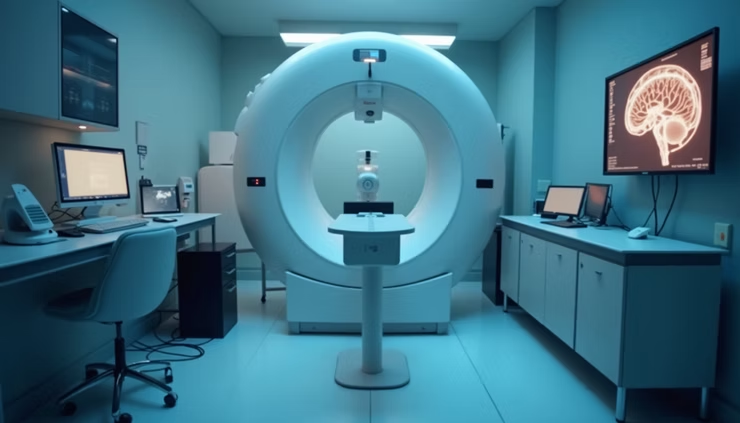
Neuroscience lab focusing on brain imaging technology
The Future of Ketamine in Mental Health
Research on ketamine continues to expand. Scientists are exploring new derivatives and formulations to improve safety and effectiveness. There is also interest in combining ketamine with psychotherapy to enhance long-term outcomes.
Ketamine’s success has opened doors to understanding depression as a disorder of brain connectivity and plasticity, rather than just chemical imbalance. This shift may lead to more targeted and effective treatments in the future.
Summary
Ketamine works by altering glutamate signaling and promoting brain plasticity, which helps alleviate depression symptoms quickly. Its unique mechanism makes it valuable for patients who do not respond to traditional antidepressants. While promising, ketamine treatment requires careful medical oversight due to potential side effects and risks.
If you want to explore more about ketamine and related compounds, visit WebCartels, which provides extensive product details including pure ketamine crystals and other substances. Always prioritize safety and consult healthcare professionals when considering treatment options.