
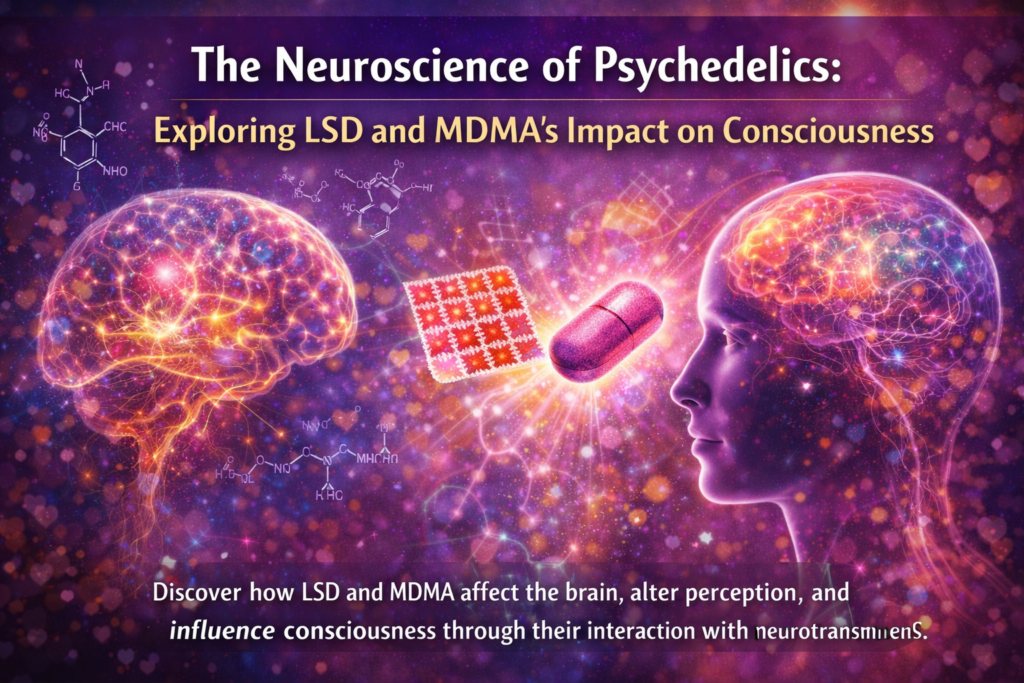
Neuroscience of psychedelics: Psychedelic substances like LSD and MDMA have fascinated scientists and the public alike for decades. Their ability to alter perception, mood, and cognition raises important questions about how these compounds affect the brain and consciousness. Understanding their impact can shed light on the complex workings of the human mind and open new possibilities for mental health treatments. This article explores how LSD and MDMA influence brain function and consciousness, supported by current neuroscience research.
!Close-up view of colorful LSD gel tabs arranged on a dark surface
How LSD Affects the Brain and Consciousness | Neuroscience Of Psychedelics
LSD (lysergic acid diethylamide) is a powerful psychedelic known for inducing vivid visual hallucinations and profound changes in thought patterns. It primarily acts on serotonin receptors in the brain, especially the 5-HT2A receptor. This receptor plays a key role in regulating mood, cognition, and perception.
When LSD binds to 5-HT2A receptors, it disrupts normal communication between brain regions. This leads to increased connectivity across networks that usually operate independently. The result is a breakdown of the usual boundaries between senses and thoughts, often described as synesthesia or a blending of sensory experiences.
Effects on Brain Networks | neuroscience of psychedelics
Research using brain imaging techniques shows that LSD reduces activity in the default mode network (DMN), a brain system involved in self-reflection and maintaining a stable sense of self. Lower DMN activity correlates with the feeling of ego dissolution reported by many users, where the sense of individual identity temporarily fades.
At the same time, LSD increases global brain connectivity, allowing regions that do not normally communicate to interact. This heightened connectivity may explain the intense creativity, altered time perception, and emotional shifts experienced during an LSD trip.
Practical Example | neuroscience of psychedelics
People using LSD often report seeing geometric patterns, enhanced colors, and distorted shapes. These visual changes reflect the altered processing in the visual cortex and other sensory areas. The drug’s impact on the brain’s communication pathways creates a unique state of consciousness that can feel both disorienting and enlightening.
For those interested in exploring LSD, products like LSD gel tabs, LSD liquid, and LSD acid tabs are available through specialized sources.
How MDMA Influences Brain Chemistry and Emotional Experience
MDMA (3,4-methylenedioxymethamphetamine), often called ecstasy, is known for its ability to enhance feelings of empathy, emotional warmth, and social connection. Unlike LSD, which primarily affects serotonin receptors, MDMA causes a massive release of serotonin, dopamine, and norepinephrine in the brain.
Emotional and Social Effects
The surge of serotonin triggered by MDMA leads to elevated mood and reduced anxiety. This makes users feel more open and connected to others. MDMA also lowers activity in the amygdala, the brain’s fear center, which helps reduce feelings of threat or stress.
These effects have made MDMA a promising tool in psychotherapy, especially for treating post-traumatic stress disorder (PTSD). By reducing fear and increasing trust, MDMA-assisted therapy can help patients process traumatic memories more effectively.
Brain Activity Changes
MDMA increases activity in brain regions related to reward and emotional regulation, such as the prefrontal cortex and ventral striatum. This combination of effects supports the drug’s reputation for producing intense emotional experiences and a sense of well-being.
Available MDMA Products
For those seeking MDMA, options include 120mg MDMA capsules, 150mg MDMA capsules, 150mg MDMA pills, and 180mg MDMA capsules.
!Eye-level view of colorful MDMA capsules arranged in a pattern
Comparing LSD and MDMA: Different Paths to Altered Consciousness
While both LSD and MDMA alter consciousness, they do so in distinct ways:
- LSD changes sensory perception and cognition by altering brain connectivity and serotonin receptor activity. It often leads to visual hallucinations and shifts in self-awareness.
- MDMA enhances emotional openness and social bonding by releasing neurotransmitters and reducing fear responses. It produces feelings of empathy and emotional warmth without strong visual effects.
Understanding these differences helps explain why each drug has unique applications, from creative exploration with LSD to therapeutic use with MDMA.
Safety and Responsible Use
Both LSD and MDMA carry risks, especially when used without proper knowledge or in unsafe environments. Effects can vary widely depending on dose, individual brain chemistry, and setting. It is important to approach these substances with caution and respect.
For those interested in learning more or obtaining these substances, reputable sources like WebCartels provide detailed product information and options for purchase. Always prioritize safety, legality, and informed decision-making. neuroscience of psychedelics
Exploring Other Psychedelic Substances
Beyond LSD and MDMA, other psychedelics like DMT (dimethyltryptamine) also affect consciousness in profound ways. DMT produces intense, short-lived hallucinations and is believed to interact with serotonin receptors similarly to LSD.
For those curious about DMT, products such as freebase DMT powder are available through specialized vendors.
Final Thoughts on Psychedelics and Consciousness
LSD and MDMA offer unique windows into the brain’s workings and the nature of human consciousness. By altering brain chemistry and connectivity, these substances reveal how perception, emotion, and self-awareness depend on complex neural networks.
As research continues, psychedelics may unlock new treatments for mental health conditions and deepen our understanding of the mind. For now, exploring their effects requires careful study and responsible use.
If you want to explore these substances further, consider visiting WebCartels’ shop for a range of options and detailed product descriptions.